
The 97% Rule of Negotiation
Most negotiation pressure follows just two recurring patterns. Learn to recognize them, prepare systematically, and make better decisions.
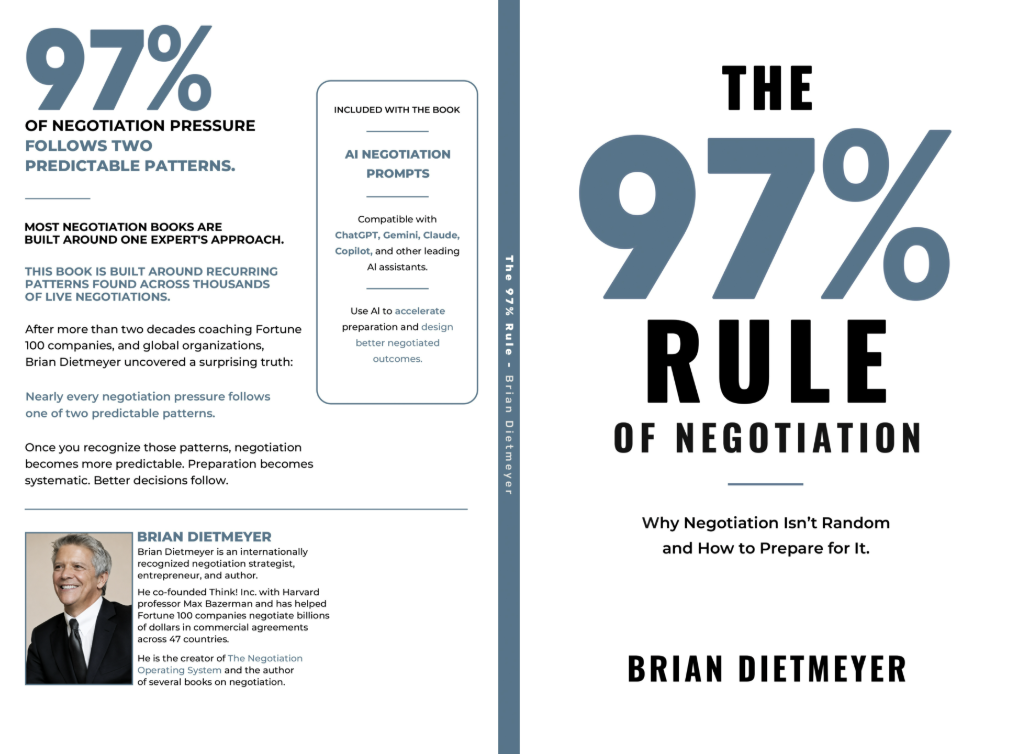
Most negotiation books teach tactics, psychology, or one expert's personal approach. The 97% Rule takes a different path.
Drawing on more than two decades of negotiation consulting, Brian Dietmeyer reveals that nearly every negotiation pressure follows just two recurring patterns. Once you recognize those patterns, negotiation becomes more predictable, preparation becomes systematic, and better decisions follow.
The book introduces the Negotiation Operating System™—a practical framework for analyzing alternatives, expanding value, and presenting better choices. It also includes AI negotiation prompts compatible with today's leading AI assistants to help readers prepare faster and more effectively.
About the Book
Why should I read this?
What's Inside
What's Inside
Recognize the two recurring negotiation patterns
Prepare systematically before pressure begins
Expand negotiations beyond price
Design better agreements
Use AI to accelerate preparation
These words cost companies millions.
Watch what happens.
The book includes practical prompts designed to help readers examine leverage, expand value, and prepare better choices with today's leading AI assistants.
AI Negotiation Prompts
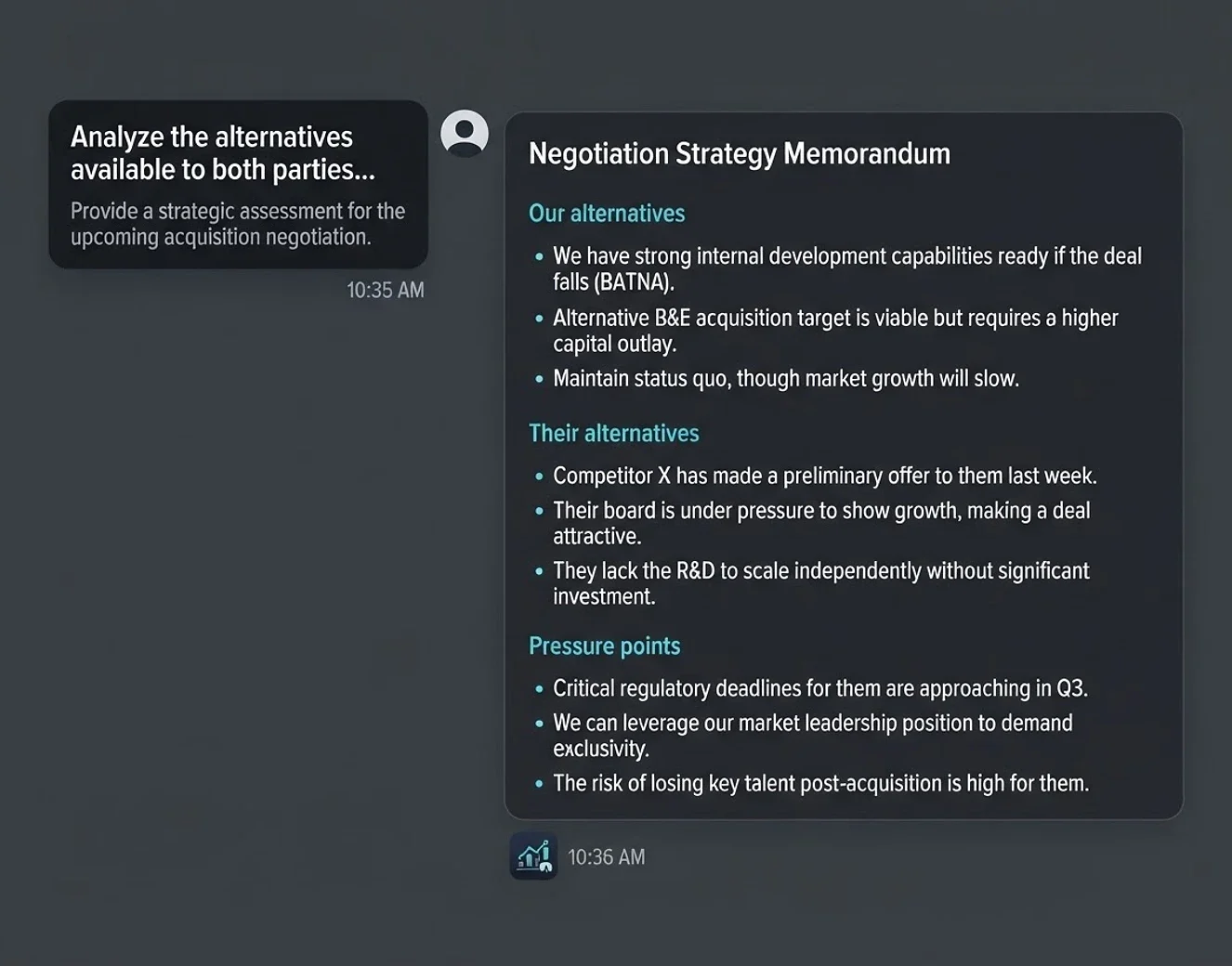
01 / Alternatives analysis
Analyze the alternatives available to both parties...
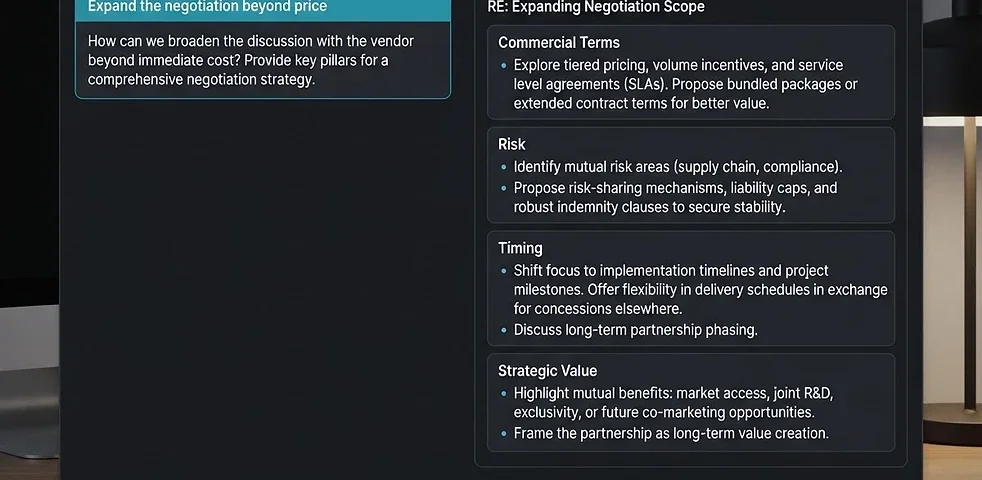
02 / Value expansion
Expand the negotiation beyond price
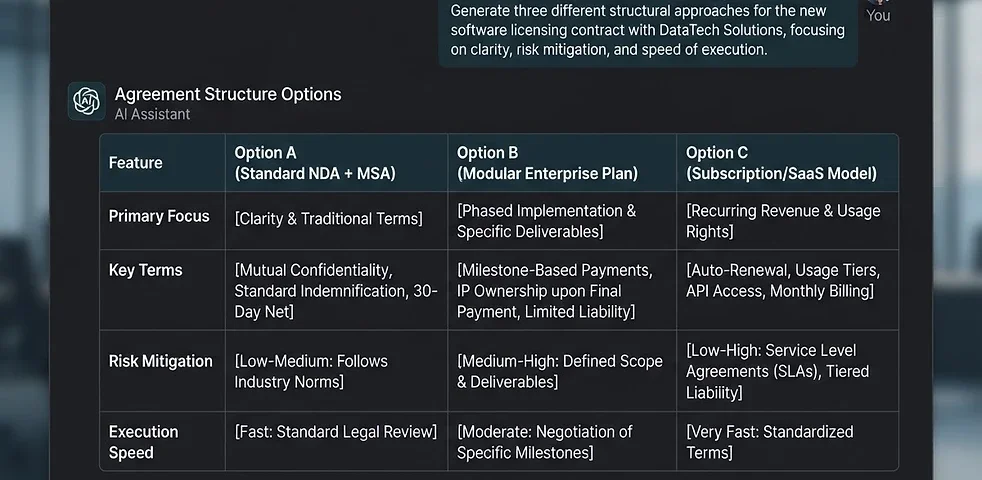
03 / Agreement design
Design three viable agreement options
Bring The 97% Rule to Your Team
Give leaders, sellers, and buyers a shared language for preparing decisions and responding to pressure.
Quantity discounts
Team discussion guide
Workshops
Signed copies
Keynote presentations
Executive briefings
Reviews
Enhance the Skills Of Your Organization
Negotiation KeynotesExecutive WorkshopsSales KickoffsStrategic Account TeamsProcurement OrganizationsCommercial Leadership MeetingsFAQ
-
Absolutely. The same patterns and process apply when negotiating a house, buying a car, discussing a salary increase, or handling other personal negotiations.
Someone selling a house might hear, “I can buy a similar house for less.” Someone negotiating compensation might hear, “That’s more than we can pay for this position.”
Different situation. Same underlying patterns.
-
Yes. Buyers and sellers often encounter mirror images of the same pressure.
A seller might hear, “I can get the same thing cheaper from your competitor.”
A buyer might hear, “I can sell this to another customer for more.”
Both are references to alternatives. Requests for concessions work the same way from either side of the table. The 97% Rule helps you recognize and prepare for both.
-
Yes. We've conducted negotiation training and consulting in 47 countries. With new global client populations, we surveyed participants about the verbal negotiation tactics they actually encountered.
The specific words and situations varied, but the same underlying patterns continued to emerge.
-
Culture absolutely matters—but mostly in how negotiations are conducted, rather than the underlying patterns of pressure.
There are important differences in communication, etiquette, hierarchy, relationships, and business customs—the classic question of whether you bow, shake hands, or kiss when you meet someone.
Those differences deserve cultural awareness and preparation. But beneath them, the fundamental negotiation patterns remain remarkably consistent.
-
Not really. The currency may change, but the negotiation patterns don't.
If you're asking for additional resources for your department, the person controlling the budget might say, “I can use that money on a more impactful project,” or simply, “I can only fund half of what you're asking for.”
One is a reference to an alternative. The other is a request for a concession. The same preparation process applies.
-
There are two things to watch.
First, don't overcomplicate the options. They should make the decision easier, not harder.
Second, expect the other side to occasionally say, “I'll take everything in the highest-value option—but at the price of the lowest.”
That's when it's important to explain that each option is a complete package. The variables within it—and across the other options—were designed to work together. If we change one important variable, we may need to adjust others as well.
Options are packages, not menus.
-
That is much rarer than people think.
It tends to occur with true commodities, where essentially the exact same thing can be purchased elsewhere. Most negotiations have additional variables—even if some initially seem “soft”—that can expand the discussion beyond a single issue.
Look for differences in timing, convenience, risk, service, terms, certainty, relationships, implementation, or other sources of value.
If there truly is only one variable and identical alternatives are readily available, there may not be much to negotiate. You're largely making a market comparison and choosing the best available option.